

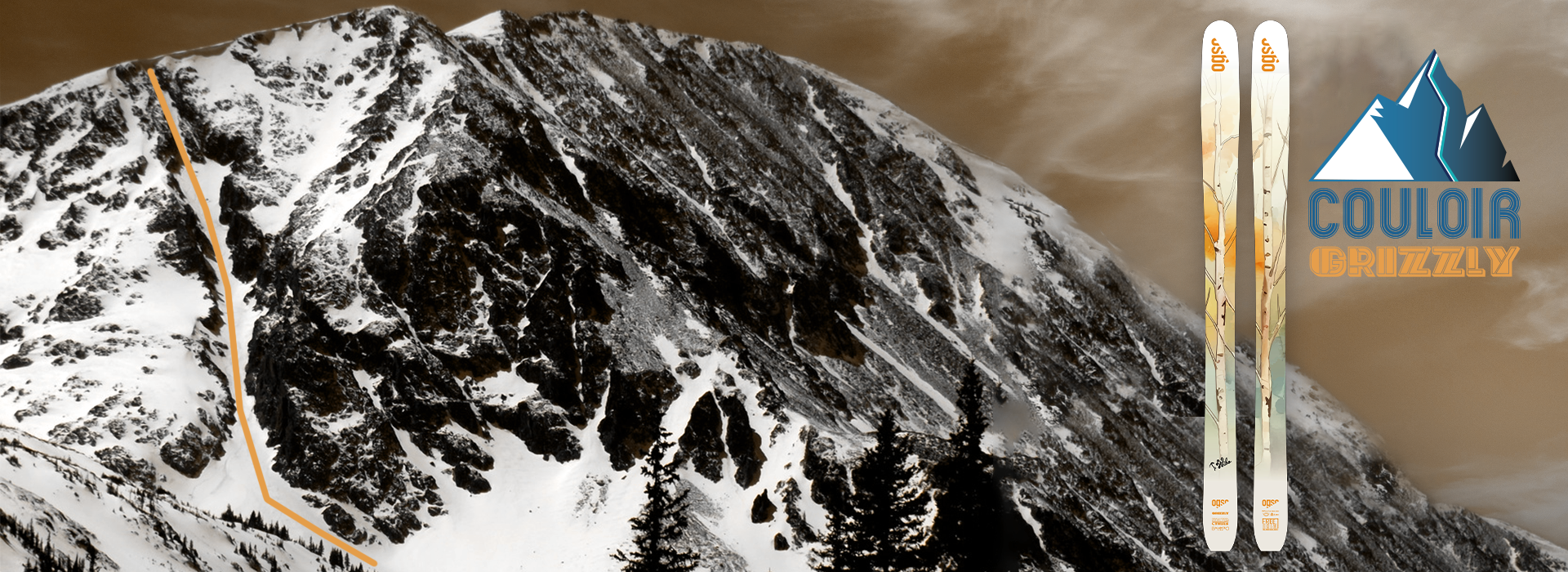
The Grizzly Couloir: A Classic Colorado Descent in the Sawatch Range
A Descent Defined by Alpine Grandeur
Located in the United States, on the rugged slopes of Grizzly Peak in Colorado’s
Sawatch Range, the Grizzly Couloir is a favorite among skiers seeking a true alpine challenge.
Beginning around 4,100 meters (≈13,450 feet) and descending to roughly
3,300 meters (≈10,800 feet), it offers about 800 meters (≈2,600 feet) of vertical.
With slope angles ranging from 40 to 50 degrees, it delivers a big mountain feel paired with
expansive alpine scenery.
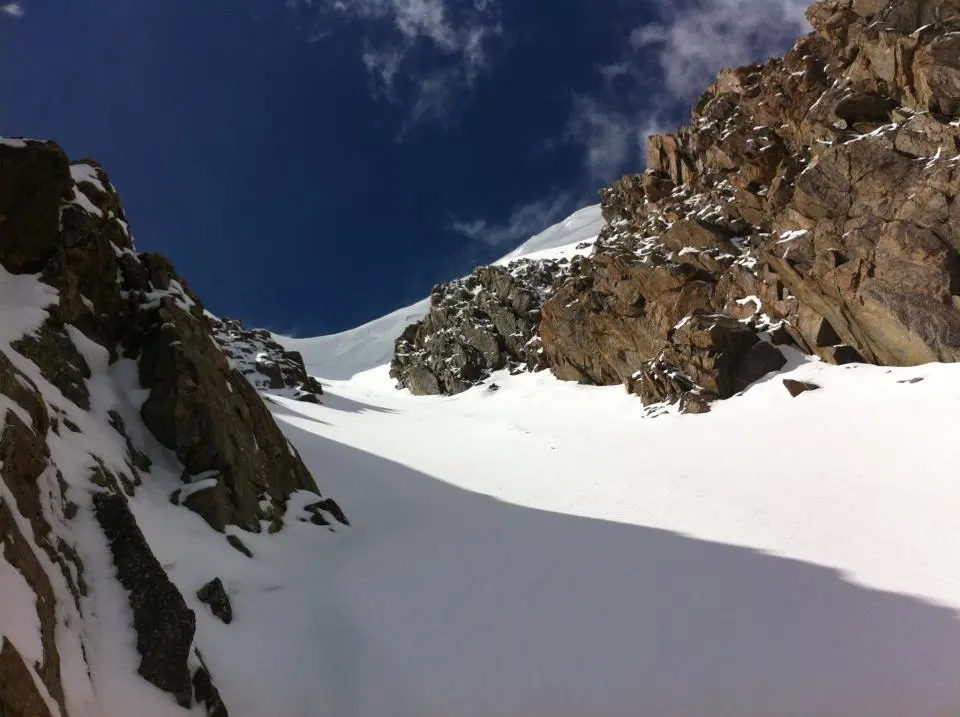
A Couloir of Pure Continuity
The top features a welcoming yet committed entrance that sets the tone for a
steady, continuous descent. The line flows cleanly with no tight constrictions or abrupt transitions.
It is a broad alpine face where the walls guide you subtly while the open terrain demands
consistent control from start to finish.
Getting There: A True Alpine Approach
Access begins at the Grizzly Peak Trailhead, located around
3,000 meters (≈9,840 feet). From there, expect approximately a
1,100 meter (≈3,600 foot) skin to reach the entrance of the couloir.
The approach is straightforward but physically demanding, setting the stage perfectly for the descent.
Once at the top, the line is clear and unmistakable.
Snow, Season, and Real Conditions
Thanks to its high altitude and north facing orientation, the Grizzly Couloir
holds snow well into late spring. Skiers can expect around 800 meters (≈2,600 feet) of vertical
with a consistent 40 to 50 degree slope. The optimal period typically spans
March through May, when coverage and stability are strongest. Be prepared for
cornices at the top and shifting alpine conditions.
Difficulty: A Test of Alpine Endurance
We rate the Grizzly Couloir around 8 out of 10 in difficulty. While not excessively technical,
it requires strong skiing skills and the ability to maintain control throughout a long descent.
It is a true examination of alpine endurance and composure.
Why the Grizzly Couloir Matters
This couloir is a cornerstone of Colorado backcountry skiing. Beyond the vertical drop, it offers
a classic alpine experience that blends challenge, beauty, and the raw appeal of the Sawatch Range.
From top to bottom, the Grizzly Couloir delivers a line that leaves a lasting impression on anyone who skis it.