

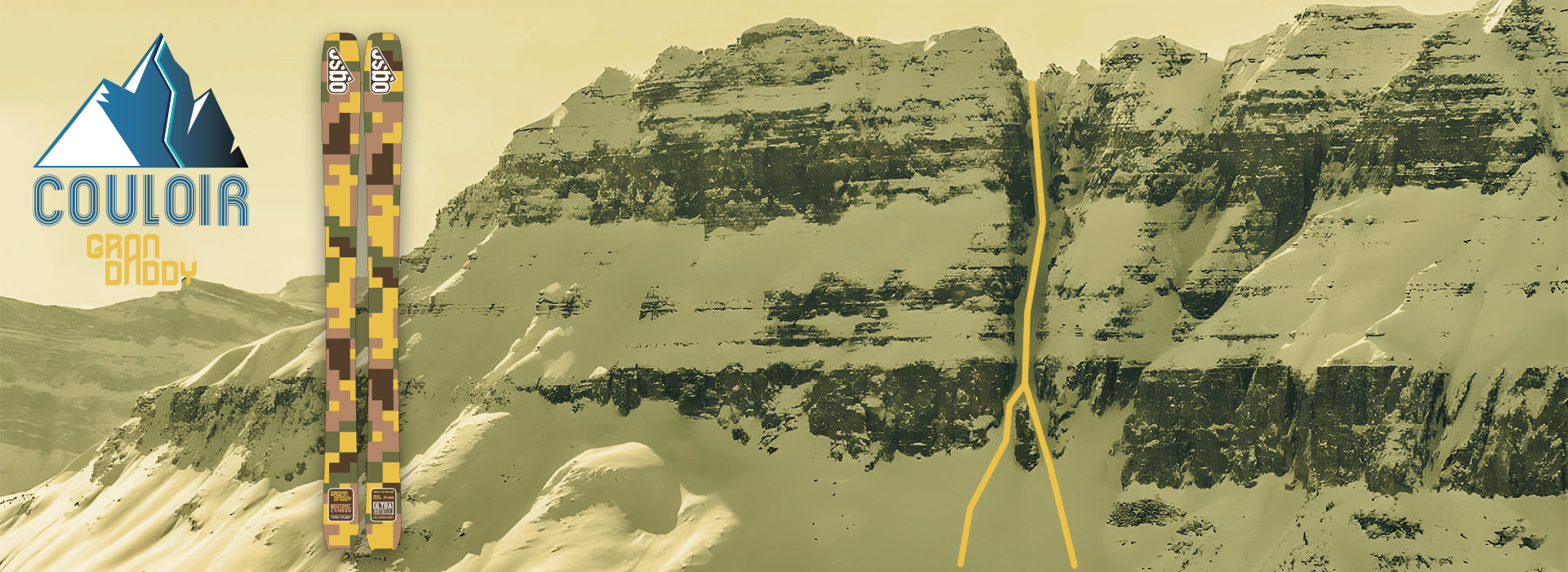
The Grand Daddy Couloir: A Legendary Canadian Descent Defined by Scale
A Descent Defined by Pure Scale
Located in Canada on the north face of Grizzly Peak, the Grand Daddy Couloir starts around
3,900 meters (≈12,800 feet) and continues almost endlessly, dropping about
900 meters (≈3,000 feet) in one clean and uninterrupted line until the basin near
3,020 meters (≈10,000 feet). There is no gimmick here, no extreme choke points or complex angles.
It is a massive, open corridor built around rhythm, flow, and endurance.
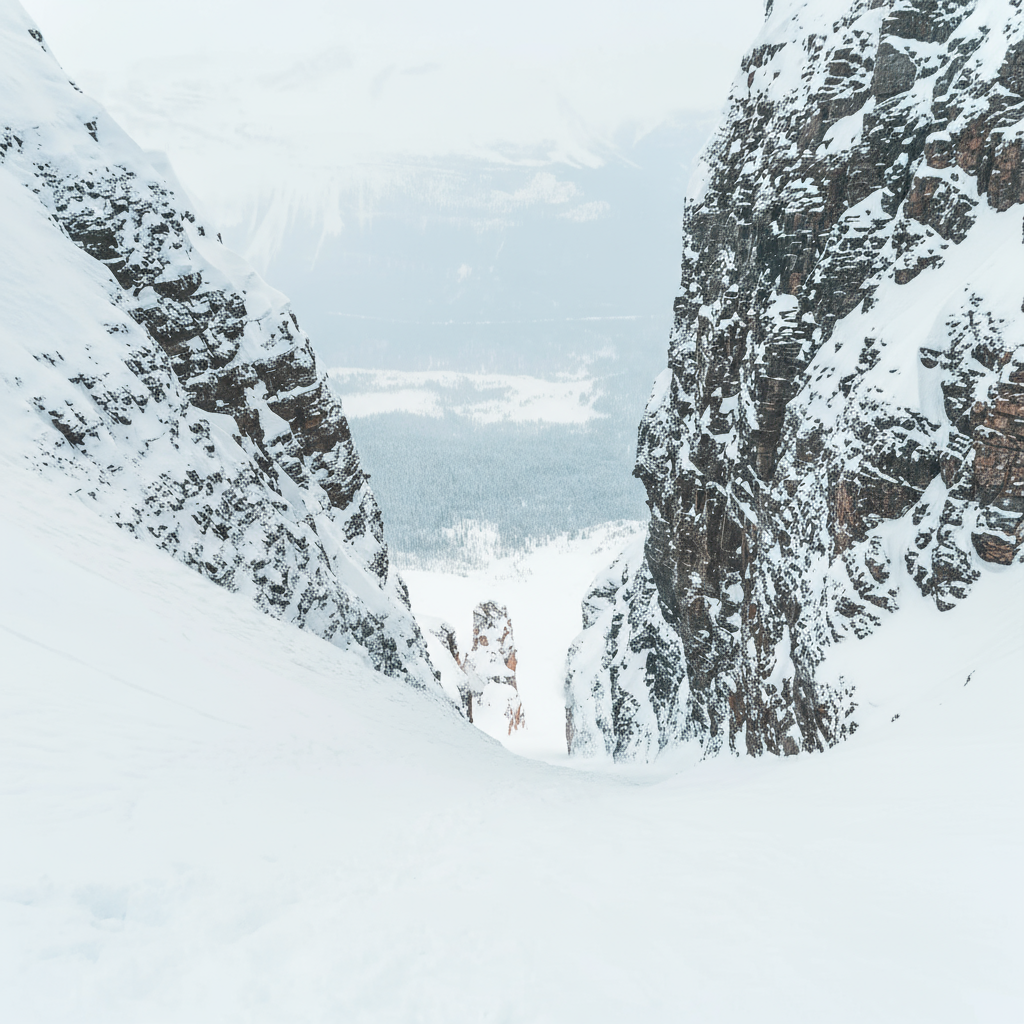
A Couloir of Pure Continuity
The top is broad and approachable, beginning around 45 to 50 degrees and occasionally steeper depending
on the season. From there, the line flows without interruption. There are no sudden breaks and no tight sections, just a
steady fall line with walls that guide without confining. Halfway down, your legs begin to burn. Three quarters down, you
feel the true scale of the face. The challenge is not technical. It is about composure and committing to a
long and continuous descent.
Getting There: Simple and Straightforward
The approach starts at the Grizzly Gulch Trailhead at roughly 2,500 meters (≈8,200 feet).
From there, a straightforward 5 kilometer (≈3.2 mile) skin leads through forested and alpine terrain,
gaining about 1,400 meters (≈4,600 feet) of elevation until reaching the entry point at around
3,900 meters (≈12,800 feet). Once at the basin, the line is obvious. No cable cars are required and
navigation is simple.
Snow, Season, and Real Conditions
Facing north, the Grand Daddy maintains excellent snow from mid winter into late spring. Expect
900 meters of vertical, a consistent 45 to 50 degree slope, and a wide, confidence-inspiring
profile. A cornice may form at the top and wind loading should be monitored, but otherwise the line remains straightforward.
The best period is March through May when coverage is optimal.
Difficulty: A Test of Endurance
We rate it around 7.5 to 8 out of 10. It is not the most technical line in the region, but it demands
serious endurance and full concentration from start to finish.
Why the Grand Daddy Matters
This is a descent defined by immersion. It is not a short adrenaline burst. It is a long, flowing,
continuous skiing experience that stays with you long after reaching the basin. From the summit entry to the final glide out,
the Grand Daddy delivers pure big mountain skiing.